
Gear notes / Trail running
Trail running shoes & gear: the complete beginner’s guide
The pieces that make a first trail outing feel more comfortable, capable, and fun, starting with shoes.
When a product link is included, Prepared Runner may earn a small commission at no extra cost to you.
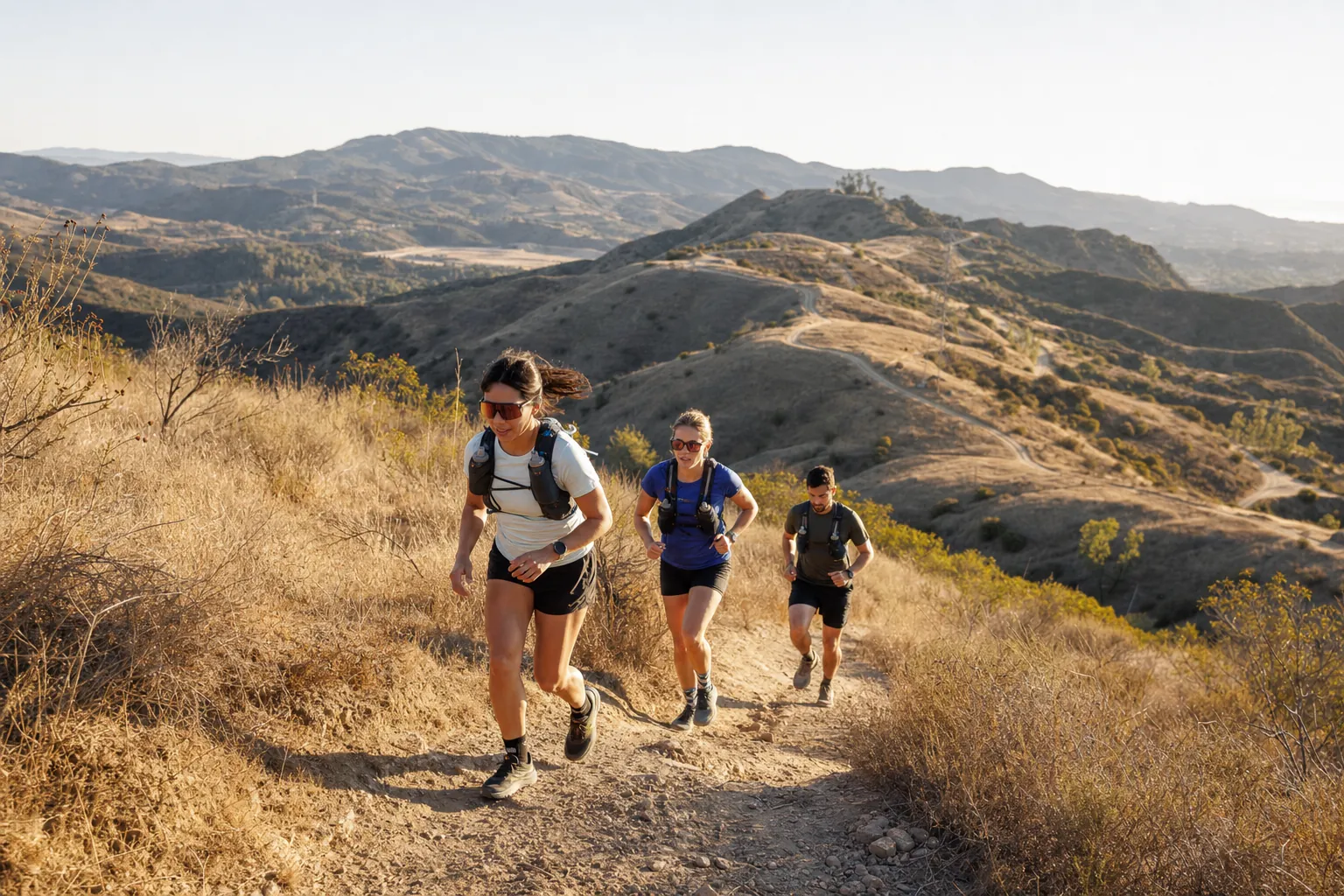
Trail running rewards you with quiet, scenery, and softer surfaces, but the wrong gear can turn a fun outing into a bad afternoon. Start with a shoe that matches the ground under you, then add only the small pieces that make your route safer and more comfortable.
Start with the right trail shoe
01 / Best overall
Altra Lone Peak 9+
A versatile zero-drop trail shoe with a wide toe box and a Vibram Megagrip outsole. It is a strong starting point for runners who want room for their toes on long descents and more confidence on technical or wet terrain.
02 / Best max cushion
HOKA Speedgoat 7
For rocky, technical trails where extra underfoot protection matters, the Speedgoat is built around cushioning and grip. Its lightweight feel and roomy midfoot make it worth considering for runners who want more buffer between their feet and the trail.
03 / Best for mud and loose terrain
Salomon Speedcross 6
Long 5mm lugs give the Speedcross serious traction in mud, soft soil, slush, and puddles. The close-woven mesh helps keep grit out, though it can feel warm when conditions are hot.
04 / Best road-to-trail hybrid
Brooks Cascadia 19
When a route mixes pavement and trail, this is a dependable middle-ground option. It is designed to handle both surfaces without feeling overly specialized in either direction.
05 / Best for rocky or alpine terrain
Saucony Peregrine 16
A lighter, lower-drop option for technical footing where trail feel matters more than maximum cushion. It can suit runners with some trail experience who want more feedback from the ground.
Beyond shoes: trail running essentials
Hydration vest or handheld bottle
Trails do not come with water fountains every mile. For routes over five or six miles, or anywhere without dependable water, a vest can distribute weight more comfortably than a handheld bottle.
Trail running socks
Cushioned, moisture-wicking socks with a snug fit can reduce bunching and blisters on uneven ground. This is one of the least expensive comfort upgrades for a new trail runner.
Gaiters
These small fabric sleeves keep dirt, rocks, and debris out of your shoes. They are especially useful on loose or sandy trails, and many trail shoes include attachment points for them.
Headlamp
A headlamp becomes essential for early mornings, evenings, or routes with heavy tree cover. For technical terrain in the dark, choose a model with at least 300 lumens.
Trekking poles
Most trail runners do not need poles for everyday runs, but collapsible poles can be genuinely useful on steep climbs and longer efforts. Many ultrarunners carry them primarily for the uphills.
Quick buying tips
- Go up half a size. Feet swell on a run, and trail shoes need enough room for descents so toes do not jam into the front.
- Match lugs to your trail type. Shallow lugs are useful on hardpack and groomed trails, while deeper, more aggressive lugs suit mud and loose terrain.
- Consider a rock plate on technical routes. This thin protective layer in the midsole can reduce the sharp feel of roots and rocks underfoot.
- Do not underestimate socks and gaiters. They are small, affordable upgrades that can make a noticeable difference in comfort.