
Routes / Field note
Southern California Trail Miles
What a trail outing asks of you, and what it gives back.
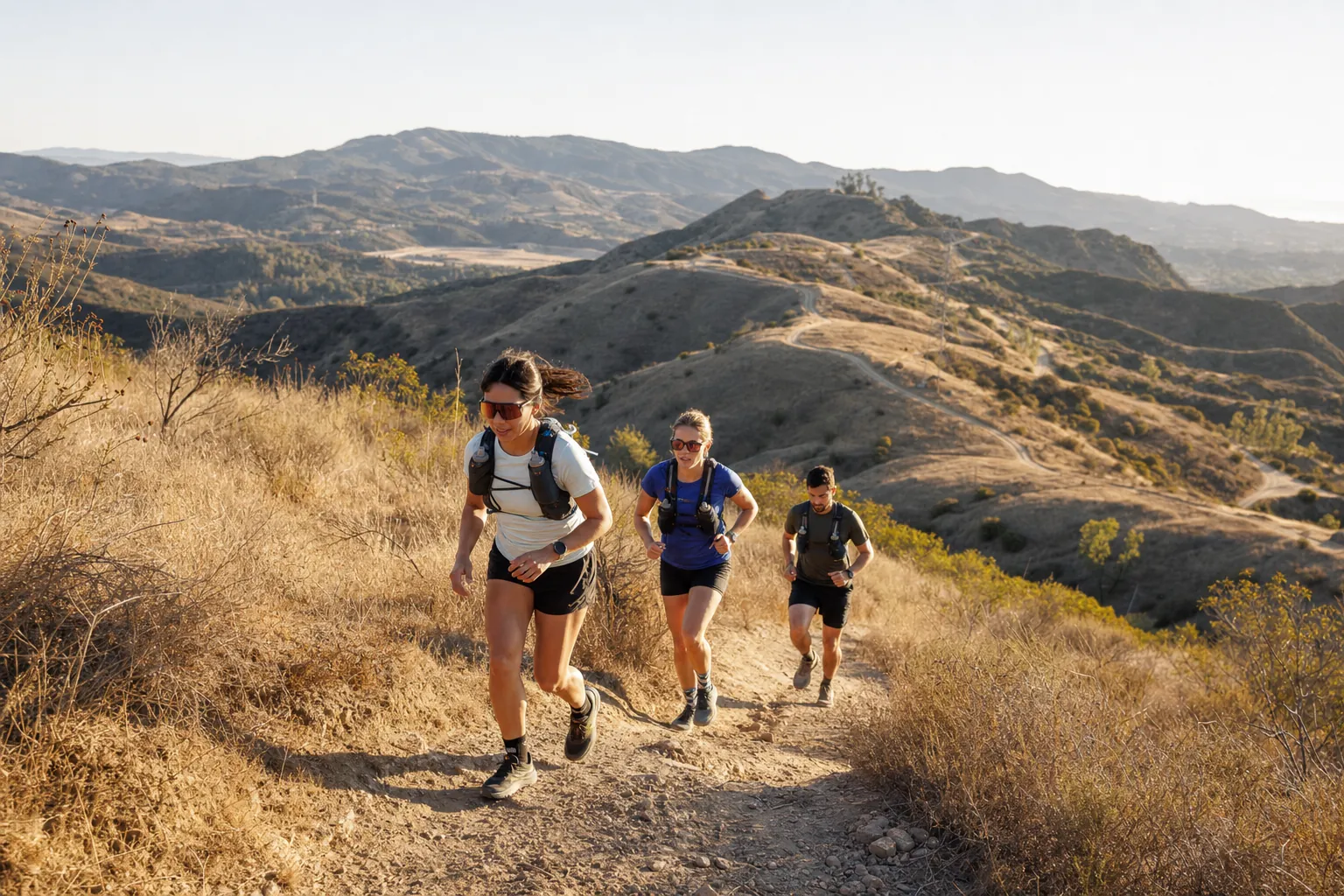
Road running rewards rhythm. Trail running rewards attention. The first time out, that difference shows up in almost every step, and it is worth knowing what you are signing up for before you lace up.
It asks you to slow down before you speed up
Your road pace means almost nothing on a trail. Roots, rocks, mud, and elevation set the tempo, not your legs. Most new trail runners fight this for the first mile or two, frustrated that a 10-minute pace now feels like work at 13. The outing is asking you to let go of a number you've been carrying around and replace it with something harder to quantify: effort, footing, and attention to the next six feet of ground. That's not a failure of fitness. It's a different sport wearing similar shoes.
It asks for your eyes, not just your legs
On the road, you can run on autopilot, earbuds in, mind somewhere else entirely. Trails do not allow that, at least not safely. You're constantly reading the ground: where to place your foot, which root is loose, where the trail bends. That kind of sustained, low-grade attention is tiring in a way that's different from cardiovascular fatigue. New trail runners are often surprised that a short, slow outing leaves them mentally wiped. That's the cost of running somewhere that demands presence.
It asks you to be okay with walking
Hills that you'd push through on the road often call for a hike on trail, even among experienced trail runners. This is one of the hardest adjustments for anyone coming from road racing, where walking can feel like giving up. On trail, walking the steep stuff isn't a concession, it's strategy. The outing asks you to redefine what counts as still running and let your ego sit that one out.
It asks a little more of your body in unfamiliar ways
Uneven ground recruits stabilizing muscles that flat pavement never touches: ankles, hips, and the small muscles around the knee. A trail outing, even a short one, can leave you sore in places a road run never would. That's not a sign anything went wrong. It's a sign your body is being asked to do something new, and it's worth easing into rather than treating like just another run.
What it gives back
In exchange for all that, trail running hands you something road miles rarely do: a kind of quiet that comes from actually being somewhere, rather than just moving through it. There is no traffic to dodge, no pace group to keep up with, often no one else around at all. Just trees, ridgelines, or the sound of your own breathing and feet.
It gives back a different relationship with effort, one measured in how you handled the climb, not how fast you covered the mile. It gives back the small, specific satisfaction of not falling on a technical descent, of finding a rhythm on switchbacks, of cresting a hill you were not sure you would hike all the way up.
And it gives back perspective, almost immediately. Most people who try one trail outing come back talking less about pace and more about the view, the smell of the woods, a deer they saw, or the way the trail opened up at the top. That shift, from performance to experience, often happens on the very first outing, before any fitness gains have had time to show up. It is less something you train into and more something the trail simply hands you, the moment you stop expecting it to behave like a road.
Tried your first trail outing? Tell the community what it asked of you.